
m u s i c a n d m o r e f r o m t h e b a n k s o f
t h e l e g e n d a r y c u y a h o g a r i v e r i n c l e v e l a n d , o h i o u . s. a.
Names, Faces
|
The Complete Story The story begins in the 1950's -- don't most rock & roll stories begin there? -- through the back doors of time, through the back doors of space, and through the back doors of two houses on West 229 St. in suburban Fairview Park, Ohio. Dan Cook and Terry Hartman were pals from age 6 onward. Younger brother Chris Cook was a pain for the first decade but later won acceptance through his purchase of a Rickenbacker guitar. The lads were struck by the music bug when the Beatles hit the charts in 1964. Dan and Terry found an abandoned shed in the neighborhood where they made guitars out of wood and, with the radio blasting, would "play" air (wood) guitar and sing along to the Mersey beat. Soon, however, Roger McGuinn and the Byrds replaced the Beatles as the lads' icons. That's when Chris, also smitten by Mr. Tambourine Man, went to DiFiore's Music on Cleveland's west side and purchased a Rickenbacker 6-string electric guitar. Terry by then had an acoustic, and they began writing songs together -- usually Dan and Terry, but sometimes with Chris' help. In 1968, the original Backdoor Men -- known briefly as the Steppenwolves -- were formed. Hartman served only as inspiration, however, because that was the year he enrolled in Ohio University. The notorious Cook brothers
began writing songs, with Dan's lyrics and Chris' music, and put
together a band consisting of Joe Kincaid on drums and Dale
Crockett on bass. The Backdoor Men, named for the old blues
standard ("I'll eat more chicken than you have ever seen;
judge's wife cried, let the man go free"), played out only a few
times to limited crowd reaction. Meantime, however, the Cook
boys were learning the ropes of the business. They created a
dance venue at their local church called The Blues Hole, and
The Cook Brothers and Hartman played off and on during the next decade, usually acoustically, including the New Year's Eve gig memorialized in one of the band's later chestnuts, "Club Madrid." Most of their songs were originals, mainly because they couldn't figure the chords out for anyone else's songs. During this time (about 1970) they met Peter Laughner, later of Pere Ubu. Laughner encouraged them in their music and their drinking; he was a natural at both. Many wild parties were staged over the next few years, and the Cook brothers helped Laughner out by booking Pere Ubu for its second gig at a high school dance in Fairview Park and, later, Laughner as a solo act at the same venue. By 1978 fate had reunited one and all. The lads decided it was now or never to pursue their rock and roll dream. In the winter of 1977-1978, they pulled together Kincaid and Crockett once again and began rehearsing a set of songs, some original, some covers. Overcome by depression, Kincaid dropped out. Crockett disappeared through a back door in time. Old pal Casey (Karl Cecil) Mears was recruited as drummer, with Al Johnston, a friend from Cook's office, on bass. This would be the first band.
If only those walls could talk ... The boys learned, more or less, a set's worth of material. The first gig was a set-up. The lads rented the party room at Chris' apartment complex in North Olmsted, and invited friends. The sound was awful, the friends brave, it snowed like hell--but the journey was launched. They told each other later that all had been a huge success, that the future was limitless for lads of their good taste and talents. And they all had plenty to drink, something that became a hallmark of Backdoor Men affairs. But finding a real gig was tough. In fact, few wanted to take on a chance on these newcomers to the scene. Yet one fateful night, the lads happened upon their mentor, John Fitzpatrick. Impresario at a self-named club in Cleveland's Flats, Fitz liked to have live bands every night. His Sunday night act was just about to end its relationship with the dingy, disorganized and usually empty club. Would the BDM like the opportunity to create their own break? Yes they would! For the next year, the band played Fitz' once a week. After about 6 months, they moved "up" to Monday nights. This put them in direct competition with New Wave Night one block away at The Pirates Cove, where Pere Ubu had earned its spurs. Yet the lads persevered. They booked other acts to share the bill with them and eventually gave The Cove a bit of real competition, even stealing Pere Ubu away one incredible night. The lads surely enjoyed counting the money that evening. A few dollars may have landed in the intrepid promoters' pockets by accident, we believe. Certainly, though, they had earned it! The Fitz gigs allowed the band to develop material on stage. They had to do at least 3 sets each night, and so had to learn and write tons of songs. Tapes of these shows suggest they did improve over time. The gigs also had the less-than-felicitous effect of creating in the lads the sense that no one was in the audience. Most nights, no one was. So the lads would banter back and forth playfully. Later, when there were actual people in the audience, this habit would be viewed as less than professional by fans used to hearing rockers move smoothly from one song to another. But the BDM would not be denied their unique personality.
Neal Price, a beefy bassist with ties to The Dead Boys, stepped into replace Al. Price was a terrific bassist but never pretended to be anything but a temporary replacement. Hartman's main memory of Price was when, during the playing of the song "Traffic Jam," the other lads would line up behind Price and pretend to tailgate him. He was not amused. Byron G. Hahn, an old high school pal, was next recruited on bass. Hahn was an exceptional guitarist, so of course leave it to the lads to put the best player on bass, while Hartman and Chris Cook searched for the right notes, often in vain. Hahn proved an excellent choice, and held down the spot for nearly a year. He would be in and out of the mix over the years, always a valued friend and serious pothead. During this period, the boys did land some other gigs. They managed to glom on to the New Wave scene, essentially crashing the party since these sensible, trendless lads never quite fit the mold. By working with bands like The Lepers, H. Bosch and others, they were able to do opening shows for small amounts of money from time to time to break the Fitz monotony. But Fitzpatrick's would always be home to the boys, remembered even today with a tear and the memory of many a profound hangover. Meanwhile, another local lad with a background roughly parallel to the Cook brothers and Hartman was moving inexorably toward a spot in the Backdoor Men, where he would serve in the drummer's chair for almost a decade, bringing stability .... And an enthusiastic thirst for beer. * * * Paul Nickels was a few years younger than the Cook Boys and Hartman, but he, too, was glued to the television on that fateful day in February 1964 when the Beatles shattered the world as we knew it with their appearance on Ed Sullivan. Nickels, a ten-year-old who to that point had been influence primarily by his older brothers' beloved soul and greaser music, was riveted -- and less than six months later took his first drum lesson.
While Dan, Chris & Terry veered off toward the lighter sounds of the Byrds and folk music, Nickels plowed headlong into the hardest rock of the day, feasting on treats he'd pick from his brothers' record collection like Cream, Jimi Hendrix, and later the seminal heavy metal of Black Sabbath. From there, he veered off into art rock, flirted with jazz, and ultimately found salvation with the rise of punk rock in 1977, never to listen to an aimless sax solo again.... By the time Nickels found gainful employment as a mail clerk at Penton/IPC Publishing, where he was to encounter Cook, his life revolved around the brute force of the Sex Pistols and Ramones, the classic roots music of the Clash, and the elegant pop of Elvis Costello, Nick Lowe & Dave Edmonds, and Blondie. Carousing at night, delivering mail to Penton editors by day, Nickels encountered Dan Cook in the offices of Industry Week magazine, where he couldn't help but miss the bizarre posters announcing gigs by the Backdoor Men and other local oddities that decorated Cook's wall. One thing led to another, and Nickels eventually found himself in a nearly empty bar in the just-as-empty Cleveland Flats listening to eccentric, loopy versions of some of his favorite British Invasion hits. Here were The Backdoor Men. He drank deeply, both of the cheap beer on tap at Fitzpatrick's, and of the potential he felt he saw in this odd collection of individuals who, like the early Beatles at Liverpool's Cavern Club, seemed oblivious of their audience as they chattered away, amused one another with inside jokes, and made remarks about their wives and girlfriends as if they weren't there..
With Nickels on board, it was back to Fitzpatrick's, where he played his first gig with the boys on July 2nd, 1979 -- his 25th birthday. And, as the calendar moved toward the next decade, the band headed toward yet more changes: One would be big and strike at the heart of the band, but it too would be survived. But before that catastrophic change occurred, another west side boy was to join the lads..... * * * During the formative years of The Backdoor Men, musician/songwriter Bill Hagan constantly crossed paths with The Cook Brothers and Mr. Hartman. While the cynical trio would occasionally play spoof gigs on open mike nights at local clubs and coffee houses, Hagan was among those who took such opportunities seriously. Yet he liked BDM's' humorous attitude toward the scene.
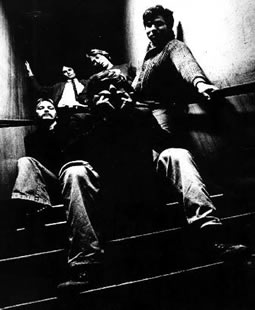
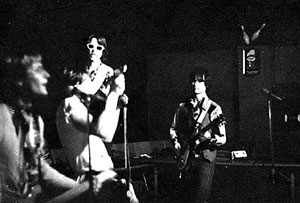
Hagan was a decent guitarist and a good pop songwriter, heavily influenced by the quintessentially English pop of Ray Davies, the blues growl of Steve Marriott, and the glam rock of David Bowie and, particularly, his guitarist Mick Ronson. Lanky and intense, Hagan had a mop of curly blond hair. He was not a drinker or a womanizer, and was very disciplined as a musician. As he often said, "I don't do jams. You wanna play a song, we'll play a song. You wanna jam, I'll go home." A perfectionist, he could be difficult to work with, in part due to his mistrust of others. Being in a band was a tough thing for Bill; he was constantly afraid that others would let him down. But when Byron Hahn finally left the band and the BDM found itself without a bass player, the way was opened for Hagan's entry into that bizarre world. The lads had finally decided that either Hartman or Chris should play bass, to stop the revolving door at that spot. Hartman blinked first and got the bass. Not to take anything away from Chris' fine guitar work, but that did leave a gap in the sound. Hagan had been hanging around anyway, and was lured into the mix. It was also at this time that the Backdoor Men, in a not-so-subtle attempt to escape their past, became Bomber's Moon. The new moniker was drawn from the title of one of BDM's earliest original songs. Hagan quickly learned the material and added a couple songs from his own extensive catalog. The new five-some began to play out. They did some photo shoots (probably the best band photos of any era) and got some of their best gigs to date. They finally bade farewell to Fitzpatricks. Tapes from this particular era reveal a band at its early peak. At a March 1980 show at the Mistake -- the then-current hot spot for local original bands, located in the basement of the then-famous Cleveland Agora -- the boys opened for the Wild Giraffes, a bland but extremely popular act at the time. The show was fantastic.
And in retrospect, it was richly deserved. The band was razor tight that night, playing everything in virtual double time. Hagan, whose real strength as a guitarist was crisp rhythm playing, ripped off chords like shards of glass. Hagan, Cook & Hartman sang like men possessed. Nickels & Chris Cook powered everything like a mortar attack. On that night, and in that place, before that crowd, the boys were as good as any band on the planet. One of the band's gigs at the time involved an overnight stay in Columbus, OH. It was there that the sea-change that was to shake the band to its foundation first surfaced: Hartman confided to Hagan his plans to leave the band. Hagan was alarmed, but when Hartman announced his resignation soon after, Hagan agreed to stay on. Thus began an interesting new phase in the band's life. * * * Hartman's departure was a complicated affair, to say the least. Though it hit the boys out of the blue, it probably had been coming behind the scenes for awhile.
Meanwhile, Zero continued to encourage Terry in his own writing, and probably took the occasion to point out that he would never get out of Cleveland with the Backdoor Men. Soon Hartman was auditioning musicians for what would become Terry and the Tornadoes, settling on his friend Kevin Kierer (rhythm guitar); a young, freckle-faced red-head drummer named David Friedman, and guitarist/producer/engineer Mike Docy on lead. The Tornadoes were launched, a crack appeared in the hearts of the Backdoor Men, and Hartman moved on from his childhood pals -- though in the end, he would return, re-establish his songwriting competition with Cook, and go on to new heights of excellence... The Backdoor Men -- now officially Bomber's Moon -- pressed on. At first they played as a foursome. Hagan began taking over rehearsals. He drilled the lads endlessly until they had each song down note for note the way Bill heard it. Then he decided a new guitarist was needed. After some nosing around, Cook brought in Doug Larcey, another local folkie who wrote a few songs and played decently. But this lineup, unfortunately, never really jelled. There was increasing tension in the band; rehearsals were more serious now and less fun (read, less alcohol), which was good for the music but bad for the souls of the Cooks and Nickels. Larcey turned out to be less skilled than the boys had originally thought. Though there were exceptions, tapes from this era reveal a lot of off-key singing from Doug, and his guitar licks often slipped in and out of the right key. While Nickels and the Cooks had demonstrated a remarkable ability to accept mistakes and less-than-sharp arrangements while still enjoying themselves, Hagan was mortified when these things happened.
Precisely what happened is lost to the mists of time. But Hagan didn't show up for the sound check, and when he came for the gig, words were exchanged with Cook, and Hagan left the club. It was the end of his days as a bomber of moons. The Hagan era produced some very good material. Like Hartman, Hagan had a knack for arranging songs. He wasn't as prolific a songwriter as Hartman was -- or at least, he recognized the limitations of the band and brought only the material he felt the boys could pull off -- but he was a better player, producing thoughtful guitar solos that demonstrated a real feel for the songs. He also proved that the lads could play together with some proficiency. And Bill was quite a performer. Once onstage, his anxiety would melt away and he'd take control, coil around the mike like a snake and sing his nuts off -- BDM's own Eric Carmen. Unfortunately, it wasn't meant to be for Hagan and the boys. The band always remained grateful for what Hagan taught them and what he left behind. His versions of "Can't Stand It" and "Ain't No Magic" still stand out as perhaps the best arrangements given those songs. And "Sweet Jane" will never be the same after Sweet Hagan's treatment of the song. * * * When Bill Hagan departed, the situation looked, for the first time, very grim indeed. The lads had been through the loss of Hartman; they'd survived moving out of their beloved W. 9th St. loft and into the basement of the Daystar Boutique -- a cheesy Lakewood head shop -- for rehearsal space; they'd survived The Alley, the Wooden Hinge and Byron Hahn's broken hand. But the thought of carrying on without a dependable guitarist was daunting indeed. But once again, the fabled Friedman family of Fairview Park came to the rescue. Dave Friedman was now drummer for Terry & the Tornados. The Cooks had known Dave since he was a 13-year-old drumming phenom. The son of Cleveland's premiere talent agent, Syd Friedman, Dave arranged for Dan to meet a friend of his to see if they could make a musical match. So Dan found himself driving through the Rocky River Reservation one afternoon, looking for a group of teenaged partiers. At last, he located the group. "Which one of you is Jimmy Juhn?" "That's me!" said a smiling, gangly lad in a white t-shirt and jeans.
Jimmy was extremely easy to work with and to get along with. On the other hand, like another member of that era, Dan Mantey, he also viewed the Bombers as light entertainment, something to be indulged in when nothing more fun was being offered. Mantey, a distinguished classical musician flirting with rock and roll who had heard the band live and liked it, joined about the same time, and Cook, Juhn and Mantey began arranging songs together. Mantey had an old ARP synthesizer which he played expertly (as he played every other wind and keyboard instrument). Tapes of the two at their peak are exciting, as they soar into their solos and tantalize the listener with dynamics and tasty interpretations. Getting them all together for rehearsals was difficult, and while Jimmy usually made the gigs, Mantey might decide to go to an art film rather than play out. So the songs had to be reworked with and without him. The upshot was the band did only a few originals during this period, most of them written by Dan. He and Jimmy co-wrote a couple songs, the best of which they released as a single, "Pretty Stupid Girl" b/w "Tell Me That You're Lying." The songs still sound good, though they are in sharp contrast to most of what came before and after. The muscular sound churned out by this lineup might have been a high point for the band, from a purely musical perspective. In Juhn's "Termite Song," the Bombers actually approached the fusion jazz sound that was captivating young rock musicians at the time.... But it was NOT what the Backdoor Men had been about, which was, above all, good songwriting.
However, running the band was becoming increasingly difficult for Dan. His job with The Akron Beacon Journal kept interfering. Meantime, Juhn and Mantey had about had all the fun they could take; Dwayne Bollmeyer, a friend of Jimmy's who had joined as rhythm guitarist, was taking over the guitar duties. As good as he was, he was no Jimmy. And the Cooks and Nickels were yearning for the old days of playing with Hartman, who was about to see the Tornados go down hard. The stage was set for the reunion of the Cooks, Nickels and Hartman. But would it happen? Yes. At first, they began tentatively to meet at Nickels' house to jam, easing their way through some blues and rock & roll standards. As they experimented with sounds, songs and arrangements, Hartman got the idea to put Chris on bass, Dan on a synthesizer and himself doing limited guitar work. They were having fun, they missed playing out, they decided to try it one more time. It was a flight that was ultimately destined to crash land. But lots of good things happened along the way as the music finally came together. The reunited lineup christened itself Napoleon In Rags, scrapped virtually all of the old songs, and developed a set of the latest material by the Cooks and Hartman. And some great stuff it was. "I felt that I could write any song I wanted back then," said Hartman years later. And it was not an overstatement. The magic was back.
Soon the boys were playing out again, although more selectively than in previous years. And they were displaying a consistency -- if not sobriety -- they hadn't mustered since the days of Iron Bill Hagan. They also found a new rehearsal space to replace their digs in Nickels' basement, where the washer and dryer often distorted the material inappropriately. It was back to downtown Cleveland in a beautiful (the term is, of course, relative) loft one story above Euclid Avenue in the very heart of the city. The new space featured working toilets -- a big step up for a beer-drinking band -- and a separate space, to which loyal producer Mike Docy ran a snake and set up sophisticated recording equipment. It was a great setup, and would fuel a rehearsal efficiency that would help the lads hone their best material ever.
But....... * * * Rock bands are not renowned for ending well, and BDM were no exception. Tensions were growing on various homefronts. Wives were unhappy. Boys were arguing about trivialities. Things came to a head during the summer of 1987. Nickels was the first to go overboard. In the unfortunate position of trying to manage the band's rehearsal site -- owned & lent to the boys for free by his boss -- he had been at increasing odds with Dan Cook, who was drinking heavily and living in the rehearsal space at the time while separated from his wife, whom he would soon divorce. He was dispatched suddenly, literally left to clean up the rehearsal space the morning after the last gig -- July 2, 1987. Ironically, it was the ninth anniversary of his first. He was replaced by local drumming perennial Dave Borucki, known by his stage name of "Dave Blaze," another fine drinker. He recorded five songs with the Cook Brothers and Hartman and played one gig. But the band was gone before the snows of Winter 1988 ever flew.... Though there were other issues -- the Cook Brothers' reluctance to tour among them -- in the end, the boys simply grew tired. Tired of each other, to some extent. Tired of the grind of rehearsing, dragging around equipment, playing to nearly empty bars. Tired of stingy club owners. Tired of recording. Tired of the hounding of wives and girlfriends. Tired of trying to work day jobs and support families and keep a rock and roll dream that was on life support going for a few more gigs. Tired of being boys when it was time to become men.. Tired of hangovers.
In the coming years, the band scattered across the world. Today Dan Cook is a freelance writer and obsessive songwriter/working musician in Portland, Oregon, thrice divorced and the father he swore he would never become. Chris Cook is a father too, retired and living in California. He is no longer involved in music. Nickels also grew some boys with his wife, Colleen, is still a Clevelander, plays in two bands (Clifton Beat and Old Brown Shoe Revue), and operates a recording studio, and Hartman became the father or stepfather to many, and lived in Akron. He largely retired after a very successful run with The Deadbeat Poets (They played at the freaking CAVERN), and sadly passed away in August 2021. He will be remembered... Hagan is in Lakewood. Dwayne Bollmeyer in in Texas, where he teaches guitar and owns a studio complex. Jimmy Juhn recently returned to Cleveland after spending more than two decades in Oakland, California working at the Soundwave Studios complex and playing with a variety of musicians. Dale Crockett remains in Greater Cleveland. The whereabouts of Joe Kincaid, Doug Larcey, and Dan Mantey are currently unknown. * * * * * All contents © Handsome Productions, 2021. May be used with permission. |


 starting
booking bands once a month. Crowds got so large the police had
to send security; after two years, the church shut it down when
a few instances of gatoring caused church deacons to raise hell.
starting
booking bands once a month. Crowds got so large the police had
to send security; after two years, the church shut it down when
a few instances of gatoring caused church deacons to raise hell.
 Rehearsals
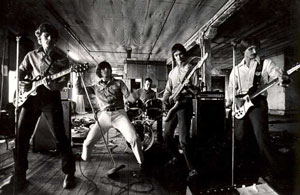
first were held in an old warehouse on W. 6th, where some pals
of Jimmy Zero of Cleveland's most notorious sons The Dead Boys
were rehearsing. But break-ins plagued the joint; equipment was
stolen, morale was low. Then Dan found new digs on W. 9, a
3,000-sq ft space ideal for the likes of the lads--and only $100
a month! This loft would serve as home base for years to come.
Rehearsals
first were held in an old warehouse on W. 6th, where some pals
of Jimmy Zero of Cleveland's most notorious sons The Dead Boys
were rehearsing. But break-ins plagued the joint; equipment was
stolen, morale was low. Then Dan found new digs on W. 9, a
3,000-sq ft space ideal for the likes of the lads--and only $100
a month! This loft would serve as home base for years to come.
 The
year at Fitz' took its toll on some band members less hearty
than the Cooks and Hartman. Al Johnston was the first to blink.
Never what one would consider an overachiever, Johnston's
decision to leave the band was not met with resistance from the
other members.
The
year at Fitz' took its toll on some band members less hearty
than the Cooks and Hartman. Al Johnston was the first to blink.
Never what one would consider an overachiever, Johnston's
decision to leave the band was not met with resistance from the
other members. 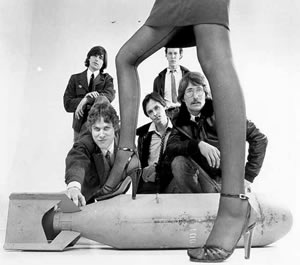 He
convinced his parents to buy him a rudimentary kit by
demonstrating his proficiency on the Rolling Stones' "Get off my
Cloud", which he played with whittled tree branches on a set of
metal potato chip cans.
He
convinced his parents to buy him a rudimentary kit by
demonstrating his proficiency on the Rolling Stones' "Get off my
Cloud", which he played with whittled tree branches on a set of
metal potato chip cans. 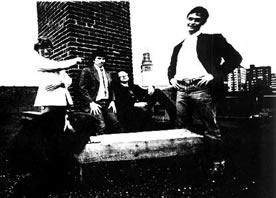 Soon
Nickels found himself in the dingy West 9th Street loft that the
band called home (a place he found thoroughly charming), plowing
his way through the band's repertoire on the drums Casey Meers
had abandoned there.... He was most impressed with the boys'
note-perfect execution of the Hollies' chestnut, "Look Thru Any
Window," which they had mastered through sheer discipline.
Soon
Nickels found himself in the dingy West 9th Street loft that the
band called home (a place he found thoroughly charming), plowing
his way through the band's repertoire on the drums Casey Meers
had abandoned there.... He was most impressed with the boys'
note-perfect execution of the Hollies' chestnut, "Look Thru Any
Window," which they had mastered through sheer discipline. 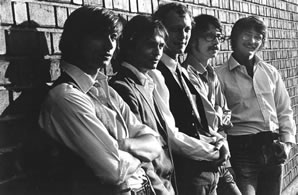 Hagan
was living in a three or four-room apartment on Madison Avenue
in Lakewood at the time. The few who visited his home were
struck by his collection of mannequins, which he would clothe in
various bizarre outfits as his whims dictated. Hagan worked in a
department store and loved to regale his guests with tales from
the dark side of Cleveland retailing.
Hagan
was living in a three or four-room apartment on Madison Avenue
in Lakewood at the time. The few who visited his home were
struck by his collection of mannequins, which he would clothe in
various bizarre outfits as his whims dictated. Hagan worked in a
department store and loved to regale his guests with tales from
the dark side of Cleveland retailing. 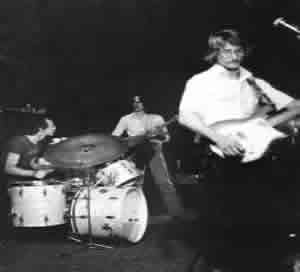 Anastasia
Pantsios, the easily under-impressed queen of the local
freelance rock writing community who is still active today, came
up to her college friend Dan Cook and gushed (ok, well, said)
"You've got quite a nice little band going there, Cook!" This
was high praise indeed from Cleveland's recalcitrant critical
community.
Anastasia
Pantsios, the easily under-impressed queen of the local
freelance rock writing community who is still active today, came
up to her college friend Dan Cook and gushed (ok, well, said)
"You've got quite a nice little band going there, Cook!" This
was high praise indeed from Cleveland's recalcitrant critical
community. 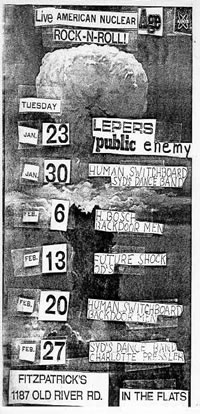 Hartman
had grown close to Jimmy Zero of the Dead Boys over the years.
Zero, whose band was at the very edge of what was going on
musically at the time, encouraged Hartman over a thanksgiving
dinner late in 1979 to consider his options. This played into
Terry's desire to develop more of his own material, and also
reflected his growing disappointment in the newer material by
Cook, whom he secretly felt was getting lazy. This was probably
true, to some extent; Cook was a fine journalist whose career
was taking off and he simply didn't have the time to devote that
Hartman did.. Hartman was far too loyal to Cook to complain, but
the seeds had been planted.
Hartman
had grown close to Jimmy Zero of the Dead Boys over the years.
Zero, whose band was at the very edge of what was going on
musically at the time, encouraged Hartman over a thanksgiving
dinner late in 1979 to consider his options. This played into
Terry's desire to develop more of his own material, and also
reflected his growing disappointment in the newer material by
Cook, whom he secretly felt was getting lazy. This was probably
true, to some extent; Cook was a fine journalist whose career
was taking off and he simply didn't have the time to devote that
Hartman did.. Hartman was far too loyal to Cook to complain, but
the seeds had been planted. 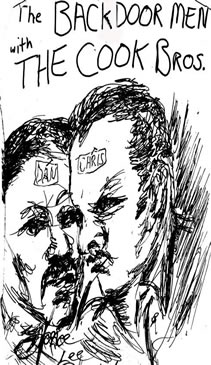 The
final separation of Hagan and the Backdoor Men/Bomber's Moon
came at one of the band's most memorable gigs. Dan Cook, in a
stroke of pure genius, had booked Joe Charboneau to appear with
the band at Fitzpatrick's for the princely sum of $100.
Charboneau was a charismatic young ballplayer with the Cleveland
Indians. The night of the gig, Joe hit a home run to beat the
Yankees. Despite his increasing fame -- he was to become the
American League's Rookie of the Year later that fall -- he
actually showed up! The line to get in the club was around the
block and then some. Much money was flowing in at the door. But
Hagan was no where to be seen.
The
final separation of Hagan and the Backdoor Men/Bomber's Moon
came at one of the band's most memorable gigs. Dan Cook, in a
stroke of pure genius, had booked Joe Charboneau to appear with
the band at Fitzpatrick's for the princely sum of $100.
Charboneau was a charismatic young ballplayer with the Cleveland
Indians. The night of the gig, Joe hit a home run to beat the
Yankees. Despite his increasing fame -- he was to become the
American League's Rookie of the Year later that fall -- he
actually showed up! The line to get in the club was around the
block and then some. Much money was flowing in at the door. But
Hagan was no where to be seen. 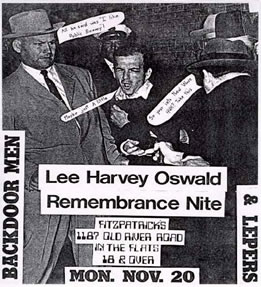 Jimmy
Juhn was a true musical genius. He was still in high school when
he joined what was then called The Bombers. He enjoyed drugs --
particularly psychedelics and pot. He got fairly lousy grades
and was considered a loser by his teachers. Yet the guy was
obviously bright and talented. He taught himself to play guitar,
and was the best guitarist Dan had ever seen anywhere. His riffs
were blistering, yet he could also play with feeling. He
expressed everything through his guitar; his verbal and written
communication skills were poor at best, and it was no surprise
when Cook learned, onstage in New York, that Jimmy was dyslexic.
But oh, could he play.
Jimmy
Juhn was a true musical genius. He was still in high school when
he joined what was then called The Bombers. He enjoyed drugs --
particularly psychedelics and pot. He got fairly lousy grades
and was considered a loser by his teachers. Yet the guy was
obviously bright and talented. He taught himself to play guitar,
and was the best guitarist Dan had ever seen anywhere. His riffs
were blistering, yet he could also play with feeling. He
expressed everything through his guitar; his verbal and written
communication skills were poor at best, and it was no surprise
when Cook learned, onstage in New York, that Jimmy was dyslexic.
But oh, could he play. 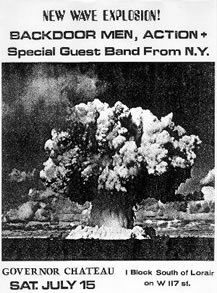 The
Juhn/Mantey period included some very satisfying shows in
Cleveland, Kent and Akron, and a memorable trip to New York
City. The band was booked by Peggy Price, a pal of Cook's, to
play her wedding. Cook also booked the band for the next night
at CBGB's, the legendary rock venue that was home to the birth
of American punk rock and where fellow Clevelanders The Dead
Boys and Peter Laughner had played. Both shows were excellent,
the trip was a blast, and a good time was had by all.
The
Juhn/Mantey period included some very satisfying shows in
Cleveland, Kent and Akron, and a memorable trip to New York
City. The band was booked by Peggy Price, a pal of Cook's, to
play her wedding. Cook also booked the band for the next night
at CBGB's, the legendary rock venue that was home to the birth
of American punk rock and where fellow Clevelanders The Dead
Boys and Peter Laughner had played. Both shows were excellent,
the trip was a blast, and a good time was had by all. 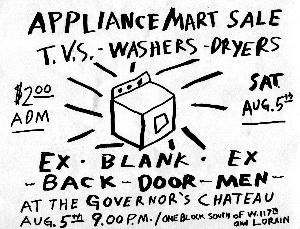 Cook
brought "Shoot the Wounded," "Club Madrid," and -- in Hartman's
opinion, the finest rock and roll song ever written -- "Latino
House Party." Hartman effortlessly tossed off such gems as
"Light of Day," "Rite Thru," and the charming "Date with Judy."
Cook bought a synthesizer and endlessly drilled himself on the
thing, bringing a fresh, more modern sound to the band. Things
came together marvelously.
Cook
brought "Shoot the Wounded," "Club Madrid," and -- in Hartman's
opinion, the finest rock and roll song ever written -- "Latino
House Party." Hartman effortlessly tossed off such gems as
"Light of Day," "Rite Thru," and the charming "Date with Judy."
Cook bought a synthesizer and endlessly drilled himself on the
thing, bringing a fresh, more modern sound to the band. Things
came together marvelously. 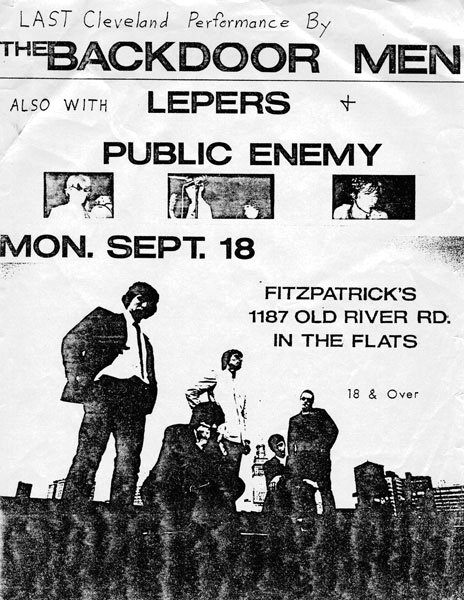 The
very nearly original Backdoor Men were on the home stretch. The
gigs were good. The beer was cold again. The wives were quiet.
The people seemed to understand that something special was going
on.
The
very nearly original Backdoor Men were on the home stretch. The
gigs were good. The beer was cold again. The wives were quiet.
The people seemed to understand that something special was going
on. 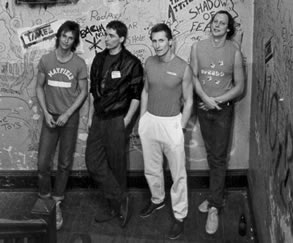 And
ultimately, like 9,999 out of 10,000 rock bands that form with
that dream, they looked in the collective mirror and realized it
was not going to happen for them.
And
ultimately, like 9,999 out of 10,000 rock bands that form with
that dream, they looked in the collective mirror and realized it
was not going to happen for them.